INDUSTRIAL & COMMERCIAL SOLAR EXPERTS
Commercial Solar Power Panels in Kerala for Businesses
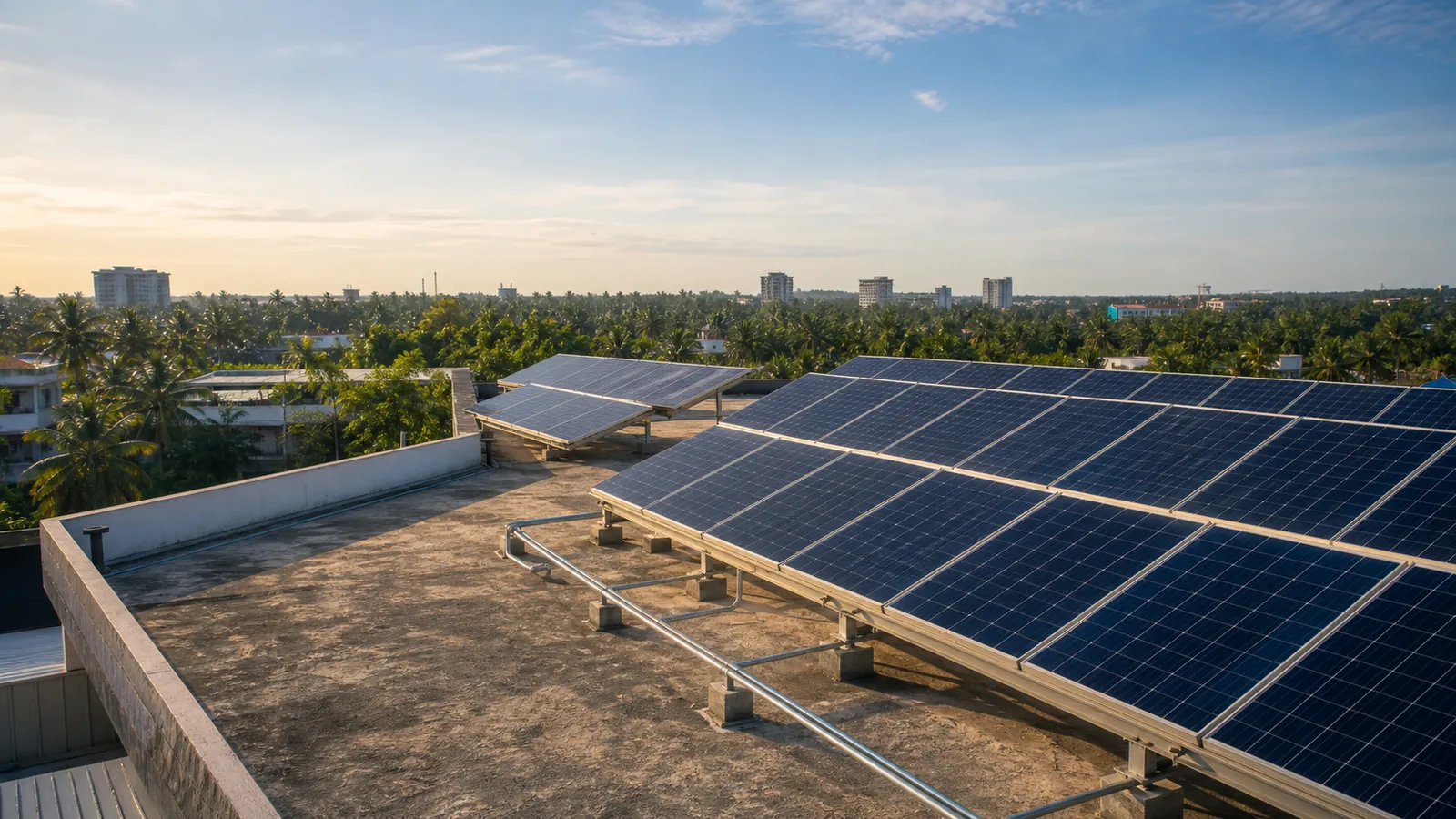
Reduce daytime grid electricity consumption with a commercial solar power system designed around your business load, available rooftop space and operating hours.
FGE Solar provides end-to-end commercial solar installation in Kerala for factories, warehouses, offices, hospitals, hotels, educational institutions, retail stores and other commercial properties.
From electricity-bill and load analysis to engineering, installation, KSEB coordination, commissioning and ongoing maintenance, our team manages the complete commercial solar project.
10 kW–500 kW+ Project Capability
Kerala-Wide Installation Support
Commercial & Industrial Solar
Business Case
Why Kerala Businesses Are Investing in Commercial Solar Power
For many businesses, electricity is a recurring operating expense that increases as production, cooling, refrigeration, lighting and equipment use grow.
A correctly sized commercial rooftop solar system generates electricity at the same premises where it is consumed. Businesses with substantial daytime electricity demand can therefore reduce the amount of energy they purchase from the grid during solar-generation hours.
Actual savings depend on your tariff category, energy-consumption profile, solar-system capacity, generation, self-consumption and applicable KSEB/KSERC billing rules.
Reduce Daytime Electricity Costs
Commercial properties often consume a large portion of their electricity during daylight hours. A properly designed solar system can directly supply part of this requirement, reducing grid imports while solar generation is available.
The amount saved varies according to:
- Electricity tariff
- Daytime consumption
- Solar-system capacity
- Roof conditions
- Solar generation
- Metering arrangement
- Business operating schedule
Improve Long-Term Energy Cost Visibility
A solar system requires upfront capital investment but does not require fuel to generate electricity.
This can help businesses reduce exposure to a portion of future grid-electricity costs, although tariffs and regulatory conditions can change over the life of the system.
Use Available Commercial Rooftop Space
Warehouses, factories, hospitals, schools, hotels and office buildings often have substantial unused roof area.
A commercial rooftop solar project turns suitable roof space into an electricity-generating business asset without requiring additional land.
Tax & Depreciation Considerations
Solar power-generating systems may qualify for depreciation benefits under the applicable income-tax rules.
The tax impact depends on the business entity, ownership model, applicable tax regime, date the asset is placed in service and other conditions.
FGE Solar can provide the project cost and technical documentation required for your financial evaluation, but businesses should confirm depreciation and tax treatment with their chartered accountant or tax adviser.
ESG & Sustainability Objectives
Commercial solar can contribute to an organisation's renewable-energy and emissions-reduction strategy by increasing the share of electricity generated from a renewable source.
Where sustainability reporting is required, generation data from the solar monitoring system can support internal energy reporting.
Lower Grid Dependence During Solar Hours
Solar cannot eliminate every electricity charge or guarantee complete energy independence.
However, it can reduce the amount of electricity imported from the grid during generation hours when matched correctly with the property's load profile.
Published Project Snapshot
25 kW Commercial Rooftop Solar – Ernakulam Warehouse
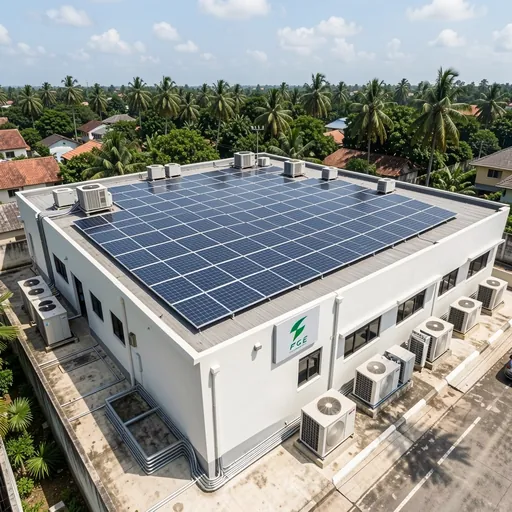
FGE Solar has published a 25 kW commercial on-grid installation completed for a logistics warehouse in Ernakulam.
- Property
- Logistics warehouse
- Location
- Ernakulam, Kerala
- System Capacity
- 25 kW
- System Type
- Commercial on-grid solar
- Solar Panels
- Adani Solar
- Inverter
- SMA
25 kW
Installed Capacity
₹35,000
Indicative Monthly Savings
3.2 Years
Payback Period
The existing FGE project listing reports indicative monthly savings of ₹35,000 and a 3.2-year payback for this installation.
Savings and payback figures from one completed project should not be treated as a universal benchmark. Each commercial property has a different electricity tariff, consumption profile, system specification and operating schedule.
View Published Commercial Solar Projects
Who We Serve
Commercial Solar for Every Business Type
FGE Solar designs commercial solar solutions around each property's electricity demand, roof availability and business operations.
Factories & Manufacturing Units
Manufacturing facilities with strong daytime equipment loads can be well suited to commercial solar power. A detailed load profile helps determine how much solar generation can be consumed directly within the facility and what system capacity is technically and financially appropriate.
Warehouses & Logistics Facilities
Warehouses often combine large rooftop areas with lighting, ventilation, office equipment and material-handling loads. A commercial rooftop solar system can make productive use of otherwise unused roof space.
Hospitals & Clinics
Hospitals and healthcare facilities operate significant electrical equipment, HVAC, lighting and support systems. Solar can reduce a portion of daytime grid consumption, while critical backup requirements must continue to be designed separately through the appropriate backup infrastructure.
Schools, Colleges & Educational Institutions
Educational campuses commonly have strong daytime electricity consumption for classrooms, laboratories, offices, cooling and other facilities. Solar can help institutions reduce their long-term electricity operating costs.
Hotels & Resorts
Hotels use electricity for air conditioning, kitchens, water heating, refrigeration, lighting and guest facilities. Commercial solar can offset part of these daytime loads when the available rooftop area and load profile are suitable.
Offices & Commercial Buildings
Corporate offices, business centres and commercial buildings commonly operate during the same hours that rooftop solar is generating electricity. This can create a strong self-consumption profile for solar for commercial buildings.
Supermarkets & Retail Stores
Retail outlets use electricity for refrigeration, cooling, lighting, displays and other equipment throughout the day. A properly sized commercial solar system can reduce part of this recurring grid consumption.
Agricultural & Agro-Processing Businesses
Cold storage, processing, pumping and packaging operations can have substantial electricity requirements. The right solar configuration depends on the consumer category, load pattern, applicable scheme and grid rules.
Religious & Charitable Institutions
Churches, temples, mosques, charitable organisations and community institutions can assess rooftop solar where electricity consumption and suitable roof area justify the investment. Any grant, CSR funding or incentive should be confirmed specifically for the institution before being included in the financial model.
Investment Breakdown
Commercial Solar Panel Cost in Kerala
The commercial solar panel cost cannot be accurately determined from system capacity alone.
Two 100 kW projects can have different investment costs depending on the property, engineering requirements and selected equipment.
Factors affecting commercial solar installation cost include:
System Capacity
Larger systems require more panels, inverter capacity, structure, cabling and associated electrical equipment.
Solar Panel Specification
Panel cost can vary according to:
- Manufacturer
- Wattage
- Module technology
- Efficiency
- Product warranty
- Performance warranty
Commercial Inverter
The inverter configuration depends on:
- Total array capacity
- Roof layout
- Electrical design
- Grid connection
- Monitoring requirements
- Redundancy requirements
Mounting Structure
The cost and design vary between:
- RCC roofs
- Metal roofs
- Industrial sheds
- Elevated structures
- Ground-mounted systems
Wind-loading, corrosion protection, waterproofing and structural conditions also influence the design.
Electrical & Safety Infrastructure
Commercial installations can require:
- AC and DC protection
- Earthing
- Lightning protection
- Isolators
- Distribution panels
- Cables
- Metering infrastructure
- Transformer-side integration where applicable
Rooftop & Structural Requirements
Additional strengthening, walkway construction, elevated structures or access improvements can increase project cost.
Battery Storage
Battery storage significantly changes the investment.
It should only be included where required by the applicable regulation, operational objective or backup strategy.
Monitoring & O&M Requirements
Larger businesses may require advanced generation monitoring, remote alerts, plant-level analytics and structured maintenance agreements.
Audit Parameters
How to Get an Accurate Commercial Solar Quote
To get a realistic cost of commercial solar energy for your facility, prepare the following details before requesting a quote:
1. Last 3–6 months of KSEB electricity bills
2. Tariff category (LT commercial / industrial or HT consumer)
3. Connected load or contract demand
4. Daytime operating hours and typical working days per week
5. Rooftop type (concrete flat roof, metal sheet shed, tile roof, etc.)
6. Approximate usable roof area
7. Structural condition of the building
8. Any significant shading from trees, parapets or adjacent structures
9. Available location for inverter installation and cable routing
10. Interest in future capacity expansion or battery storage
A credible solar installer will review these parameters and conduct an engineering site survey before providing a firm commercial solar quote.
Request Commercial Solar Cost Estimate
System Architecture
What Is Included in a Commercial Solar Power System?
A complete commercial solar power system engineered for Kerala conditions includes more than solar panels.
Commercial Solar Panels
Solar PV modules convert sunlight into DC electricity.
Panel selection should consider:
- Efficiency
- Module wattage
- Technology
- Temperature characteristics
- Available roof area
- Manufacturer warranty
- Performance warranty
- Service support
Solar Inverters
Inverters convert the DC power generated by the solar panels into AC electricity suitable for use within the facility.
Commercial systems may use one or multiple inverters depending on system capacity, roof layout and electrical design.
Mounting Structure
The mounting structure secures the panels to the roof or ground.
Commercial design must consider:
- Roof construction
- Wind load
- Structural capacity
- Drainage
- Access
- Maintenance
- Corrosion environment
Electrical Protection
Appropriate AC/DC protection, earthing, isolators and other safety equipment form an essential part of professional commercial solar power installation.
Solar Monitoring System
Monitoring allows facilities teams to track:
- Energy generation
- System availability
- Inverter status
- Historical output
- Performance issues
Optional Energy Storage
Battery storage may be included where required by regulation or where the business has a specific operational need.
Battery sizing should be based on the actual objective rather than automatically added to every commercial project.
How It Works
Our Commercial Solar Panel Installation Process
A structured 7-stage engineering methodology designed to minimise disruption to your everyday business operations.
01
Commercial Load Analysis
We review recent electricity bills, tariff category, sanctioned/connected load or contract demand, operational hours and consumption patterns.
The objective is to determine how much solar electricity can be effectively used by the facility and avoid unnecessary oversizing.
Output: Initial feasibility and capacity range
02
Rooftop & Structural Feasibility
Our team assesses:
- Usable roof area
- Roof type
- Roof condition
- Shading
- Access
- Structural suitability
- Existing electrical infrastructure
- Panel-layout possibilities
For larger or technically complex roofs, appropriate structural review may be required before final design.
03
Custom Commercial Solar System Design
FGE Solar develops a project-specific design based on the site's technical and commercial requirements.
The proposal can include:
- Proposed system capacity
- Panel specification
- Inverter specification
- Mounting system
- Electrical protections
- Estimated annual generation
- Self-consumption assumptions
- Indicative electricity savings
- Project cost
- Estimated payback
- Warranty details
- Installation scope
- Items excluded from the quotation
This provides a more useful basis for comparing commercial solar companies than simply comparing the lowest price per kW.
04
KSEB Documentation & Grid Approval
FGE Solar assists with the applicable utility documentation and technical process for grid-connected projects.
This can include:
- Feasibility application
- Technical documentation
- Single-line diagram
- Metering requirements
- Inspection coordination
- Connectivity documentation
The appropriate billing arrangement depends on the consumer category, project capacity and current KSERC regulations.
Final feasibility, capacity approval and metering arrangement remain subject to KSEB/KSERC requirements.
05
Professional Commercial Solar Installation
The installation is planned to minimise disruption to normal business operations wherever practical.
Work typically includes:
- Mounting structure
- Solar panels
- Inverters
- DC cables
- AC cables
- Electrical protections
- Earthing
- Monitoring configuration
- Required metering interfaces
Project duration depends on system size, site conditions, approvals, weather, roof complexity and electrical work.
Avoid guaranteeing one installation timeline for every commercial project.
06
Testing, Commissioning & Monitoring
Before handover, the system undergoes the applicable electrical and operational checks.
The commissioning process includes:
- Equipment testing
- System verification
- Monitoring setup
- Utility inspection coordination where required
- Customer/facilities-team handover
The facility receives the relevant system and operating information after commissioning.
07
AMC & Performance Support
Commercial solar should be monitored and maintained throughout its operating life.
FGE Solar can provide ongoing support for:
- Panel inspection
- Cleaning planning
- Inverter checks
- Electrical inspection
- Generation review
- Fault identification
- Preventive maintenance
- Warranty coordination
KSEB Grid Connectivity for Commercial Solar in Kerala
Commercial and industrial grid treatment should not be described as identical.
Under the Kerala State Electricity Regulatory Commission's 2025 Renewable Energy and Related Matters Regulations, eligible industrial consumers may opt for net metering for renewable-energy systems from 1 kW up to 500 kW, subject to the specified conditions.
The regulations also make net billing available to all consumers/prosumers, subject to capacity and other conditions.
The appropriate arrangement for a particular business depends on:
- Consumer category
- System capacity
- Connected load or contract demand
- Storage requirements
- Utility feasibility
- Applicable KSERC rules
For this reason, FGE Solar reviews the customer's electricity connection and proposed system before recommending the grid configuration.
Common Questions
Frequently Asked Questions About Commercial Solar
What are commercial solar power panels?
Commercial solar panels are photovoltaic modules installed to generate electricity for businesses, institutions, factories and other non-residential properties. A complete system typically includes solar panels, inverters, mounting structures, electrical protection, monitoring and grid-integration equipment.
How much does a commercial solar panel system cost in Kerala?
The commercial solar panel cost depends on system capacity, panel and inverter specifications, roof type, mounting structure, electrical work, storage requirements and installation complexity. A site survey and electricity-load analysis are necessary before providing an accurate commercial quotation.
What size commercial solar system does my business need?
The right capacity depends on electricity consumption, daytime demand, connected load or contract demand, roof space, tariff category and applicable utility regulations. FGE Solar reviews recent electricity bills and the operating profile before recommending capacity.
What is the payback period for commercial solar in Kerala?
There is no single payback period for all commercial installations. Payback depends on project cost, electricity tariff, solar generation, self-consumption, applicable depreciation/tax treatment, financing cost, maintenance, and future tariff changes. Businesses with strong daytime electricity consumption may achieve shorter payback than sites where much of the generation would be exported.
Is PM Surya Ghar subsidy available for commercial solar?
PM Surya Ghar Central Financial Assistance is intended primarily for eligible residential household rooftop-solar installations. Commercial and industrial connections should not assume that this residential subsidy applies. Any sector-specific incentive should be verified against the relevant current government scheme before being included in the investment model.
Solar Planning Hub
Plan Your Commercial Solar Installation in Kerala
Before approving an investment, understand the technical, financial and regulatory requirements of your project.
- Calculate Your Potential Solar Savings: Use your current electricity consumption as the starting point for an indicative system estimate.
- Understand KSEB Grid Rules: Review the current net-metering and net-billing requirements for solar projects in Kerala.
- Explore On-Grid Commercial Solar: Understand how grid-connected solar can offset daytime electricity consumption.
- Explore Solar AMC & Maintenance: Protect system performance through preventive inspection and ongoing maintenance.
- View Commercial Solar Projects: See published FGE Solar installations and project specifications.
- Find Commercial Solar Installation Near You: FGE Solar provides commercial solar installation support across Kerala's 14 districts.
Customer Stories
Countless Families & Businesses Saving on Their Electricity Bills Every Month
Real Kerala homeowners and clinics. Real KSEB bill savings. Watch their stories.
Adars V. S.Manager, Trust Health Care · Trivandrum
Suresh R.Retd. Senior Superintendent, KSEB · Kattayikonam
C. YesodharanVidhya Gardens · Thiruvananthapuram